
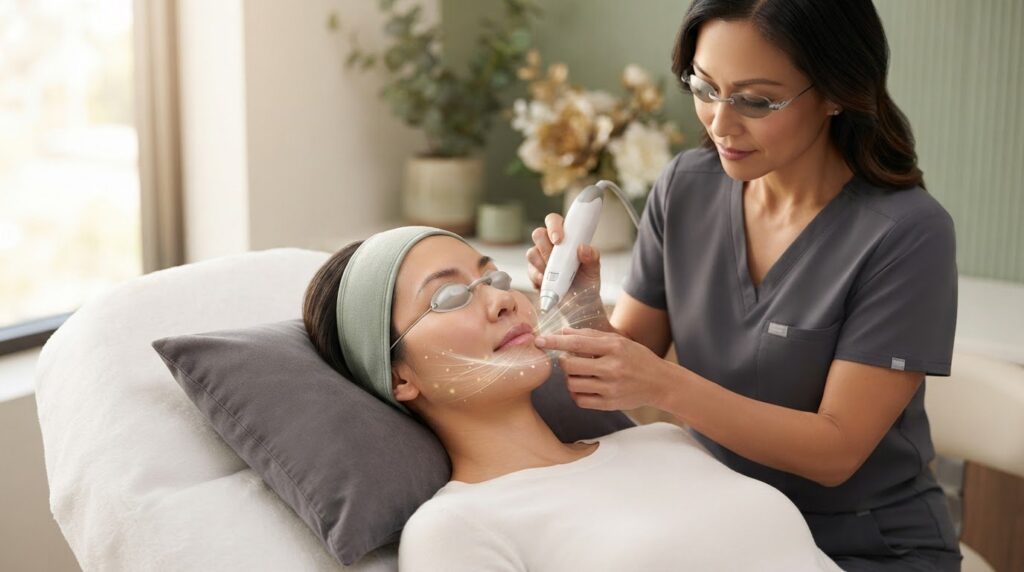
LipLase can support fuller-looking lips, but the results aren’t permanent. Laser LipLase treatment isn’t permanent because its effects rely on collagen, which naturally decreases with age; results can last 6-12 months between touch-ups. The change develops gradually as the body produces collagen through its natural healing process.
If you’re considering LipLase, it’s natural to ask how long the results last and whether maintenance treatments may be needed. The goal is a natural-looking enhancement, with a clear understanding of what the treatment can and can’t do.
Here, you’ll learn how LipLase stimulates collagen, when results may become noticeable, and how maintenance can help sustain them. We’ll also explain typical session spacing, what happens during a visit, and possible downtime, so you can decide whether this approach fits your goals.
Key Takeaways
- Learn how LipLase uses the body’s natural healing response to support collagen production and gradual lip fullness.
- Understand what treatment may feel like and what temporary effects, such as warmth or swelling, can occur afterward.
- See how treatment visits are commonly spaced and why the number of sessions can vary with your age and goals.
- Find out what influences maintenance timing and how to think about touch-ups as results change over time.
How LipLase stimulates collagen
Is laser LipLase treatment permanent? No. LipLase stimulates collagen through the body’s natural healing process rather than adding lasting volume. Collagen supports lip structure, but the body naturally produces less of it with age. As new collagen forms, fullness may develop gradually over several weeks.
Treatment works across the lips, using multiple laser passes on inner and outer areas. The first step is performed inside the mouth, where treatment aims to improve perioral wrinkles and create vermilion eversion, a more outward turn of the lip’s coloured border.
Collagen remodeling takes time. New collagen fibre synthesis begins three to four weeks after treatment and typically lasts six to eight months. This helps explain why the lips may continue changing after an appointment instead of showing the full effect immediately. Your starting lip shape and desired change help set expectations.
LipLase and lip fillers take different approaches. LipLase encourages the body’s own collagen response, while fillers are injections. The clinic notes that lip injections can cause swelling and bruising. LipLase’s gradual change may suit someone who prefers a collagen-based approach over injected volume, but the treatment experience is different.
Possible short-term effects include oedema, or swelling, and a slight feeling of heat. In a reported case, these effects subsided with cooling. LipLase may suit someone seeking gradual enhancement who is comfortable with results developing over time. Anyone seeking immediate injected volume, or with a current lip concern, should pause for a clinical assessment before treatment. Plan for possible temporary warmth or swelling immediately afterward.
Treatment duration and downtime
Treatment timing includes both the length of each visit and how long results remain visible. Understanding the schedule, gradual changes, and possible short-term effects can make planning easier.
Typical Results Duration
LipLase results develop gradually over the weeks and months after treatment, rather than appearing all at once. How long they remain noticeable depends on factors such as age, starting lip shape, and treatment goals. Collagen naturally decreases with age, influencing how results evolve. Multiple treatments can produce long-lasting results, while maintenance timing is a separate consideration.
Time Required for a Session
There isn’t one fixed visit length for every patient. The time depends on the treatment plan and the areas receiving laser passes. LipLase is typically administered every two weeks and usually requires three visits; the number varies with age and goals. When planning, consider the full series as well as the time needed for each session.
What to Expect During and After Treatment
During a session, the practitioner applies laser treatment to the lips. The clinic describes LipLase as painless, with minimal side effects and no recovery time. Patients may still experience temporary oedema, or swelling, and slight heat afterward. In a reported case, both effects subsided with cooling. Results take time to develop, so immediate appearance isn’t the only useful measure of progress.
After treatment, the reported case showed maintained lip fullness and Cupid’s bow definition at the two-week follow-up. That example offers a point of reference, not a timeline for every patient. To discuss treatment timing and what to expect, explore Laser LipLase treatment as a next step.
How long does each session last?
LipLase is usually planned as a course of visits, not a single appointment. Consider two parts of the schedule: how long each session takes and how often sessions are booked. Treatment guidance gives a typical spacing and visit count, while individual session time depends on the treatment being performed.
Typically, patients have three visits, with sessions scheduled every two weeks. The number can vary according to age and goals. For example, the treatment plan considers whether someone wants subtle fullness or a more noticeable change, then shapes the course around that aim. Staged visits allow treatment to progress toward the goal over time.
Session length and course length are different measures. A course may span several appointments, although each appointment is one treatment visit. The time for a session depends on the treatment plan and areas addressed. The two-week interval describes the time between visits, not the length of an appointment.
Multiple sessions allow progress to be considered across appointments. Rather than judging the final result immediately after the first visit, patients can observe how their lips respond during the course. Age and desired outcome help determine the number of visits. LipLase also differs from fillers: it uses laser treatment, while fillers add volume through injections.
For practical planning, keep the recommended interval consistent and consider how appointments fit your routine. If a session must be moved, the gap between visits may change, so keep timing in the treatment plan. The usual schedule is every two weeks, with three visits as a typical course; age and goals influence the number. This gives you a clear starting point without confusing appointment spacing with session duration.

LipLase maintenance treatments
LipLase results can last 6-12 months between touch-ups. That range offers a useful planning window, not a fixed date for everyone. Maintenance is intended to refresh the fuller appearance as results change over time. It doesn’t make the effect permanent, so think of touch-ups as a possible part of maintaining your preferred look.
Use your original goal to guide the decision. If you wanted a subtle change, a slight return toward your starting appearance may feel acceptable. If you hoped to maintain a more defined look, you may notice changes sooner. Compare your current lips with your initial result rather than scheduling another treatment just because a particular month has arrived.
A simple tracking step can help: take a clear photo before treatment, then compare it with later photos in similar lighting and from the same angle. This makes gradual changes easier to notice than relying on memory. Look at lip fullness and the outline you wanted to enhance, then decide whether the current appearance still suits your preference.
Maintenance is separate from the initial treatment course. The first course builds toward the desired change; a touch-up addresses how that result looks later. Since collagen changes naturally over time, maintenance focuses on your evolving appearance and goals. A fuller look may remain satisfying without an immediate repeat, while visible fading may prompt you to revisit the plan.
Before choosing a touch-up, identify what has changed and what you want to preserve. Consider the 6-12-month results window alongside your own visual comparison, then discuss the next step in light of those details. A thoughtful review can help distinguish a preference for maintenance from an expectation of permanent volume. Schedule a maintenance discussion to plan around your desired lip appearance.
Butterfly Dental Care: Routine Dental Cleanings
Butterfly Dental Care offers Laser LipLase for patients considering a collagen-based approach to fuller-looking lips. If you’re weighing treatment or wondering whether maintenance fits your goals, discuss your preferred look and expectations with the practice to understand the next step.
LipLase results are not permanent, and maintenance may be considered as the appearance changes over time. Butterfly Dental Care also provides routine dental cleanings, alongside other dental treatments, so you can discuss lip treatment in the context of your broader care. Whether you’re exploring LipLase for the first time or thinking about a touch-up, the practice can help you consider the service and your goals.
Contact Butterfly Dental Care to discuss Laser LipLase and whether it suits your goals.
Choose a plan that fits your goals
Before deciding, consider what “fuller” means to you: a subtle shift, a clearer lip outline, or a change you’re comfortable maintaining. If you’re asking whether laser LipLase treatment is permanent, the practical question is whether its gradual, collagen-based approach matches your expectations over time. A treatment conversation can help align your desired appearance with a realistic plan.
Butterfly Dental Care offers Laser LipLase alongside routine dental cleanings, dental implants, and other laser dental treatments. If you’re considering LipLase or whether maintenance fits your preferences, discussing your goals is a helpful next step. You can also explore how the practice’s broader dental services fit your care needs.
Contact Butterfly Dental Care to discuss your LipLase goals and possible next steps. Take the time you need to choose an approach that feels right for you.
Frequently Asked Questions
What is LipLase®?
LipLase® is a laser lip treatment that aims to encourage collagen production through the body’s natural healing process. Unlike an injectable filler, it doesn’t add volume directly. The gradual approach may appeal if you’re seeking a subtle change and understand that results evolve over time. Butterfly Dental Care offers Laser LipLase in the 95129 area.
How many sessions are required?
A typical course involves three sessions, usually spaced two weeks apart. The number can vary with age and treatment goals, so focus on the change you want rather than assuming every plan is identical. Someone seeking modest enhancement may have different goals from someone focused on more noticeable definition. The recommended course is a starting point for planning.
Are the results of laser lip plumping permanent?
No. Laser lip-plumping results aren’t permanent, and touch-ups may be considered as your appearance changes. To decide whether maintenance interests you, compare your current lip shape with the look you hoped to achieve. If you still like the result, you may prefer to wait; if you notice fading, revisit your goals.
How long does it take to see results?
Changes develop gradually over several weeks as collagen builds. New collagen fibre synthesis begins three to four weeks after treatment, so your immediate appearance isn’t the final measure of progress. To track changes, compare photos taken under similar lighting and angles. This can help distinguish gradual changes in fullness from differences caused by expressions or camera position.
How long does it take?
The full treatment course usually spans several weeks, with visits typically scheduled every two weeks. That schedule describes the time between appointments, not the length of an individual visit. Session time depends on the treatment plan and areas addressed. Keep these timelines separate when arranging appointments around work or other commitments.
Is there any downtime required?
LipLase is described as requiring no recovery time, though temporary effects can occur. A reported patient experienced swelling, called oedema, and slight heat after treatment; both subsided with cooling. If you have plans immediately afterward, allow for the possibility that your lips may feel warm or appear swollen. Follow the aftercare instructions provided for your treatment.
 English
 Chinese (Simplified)
 Spanish
 Vietnamese